

Getting the most out of your Second Brain.
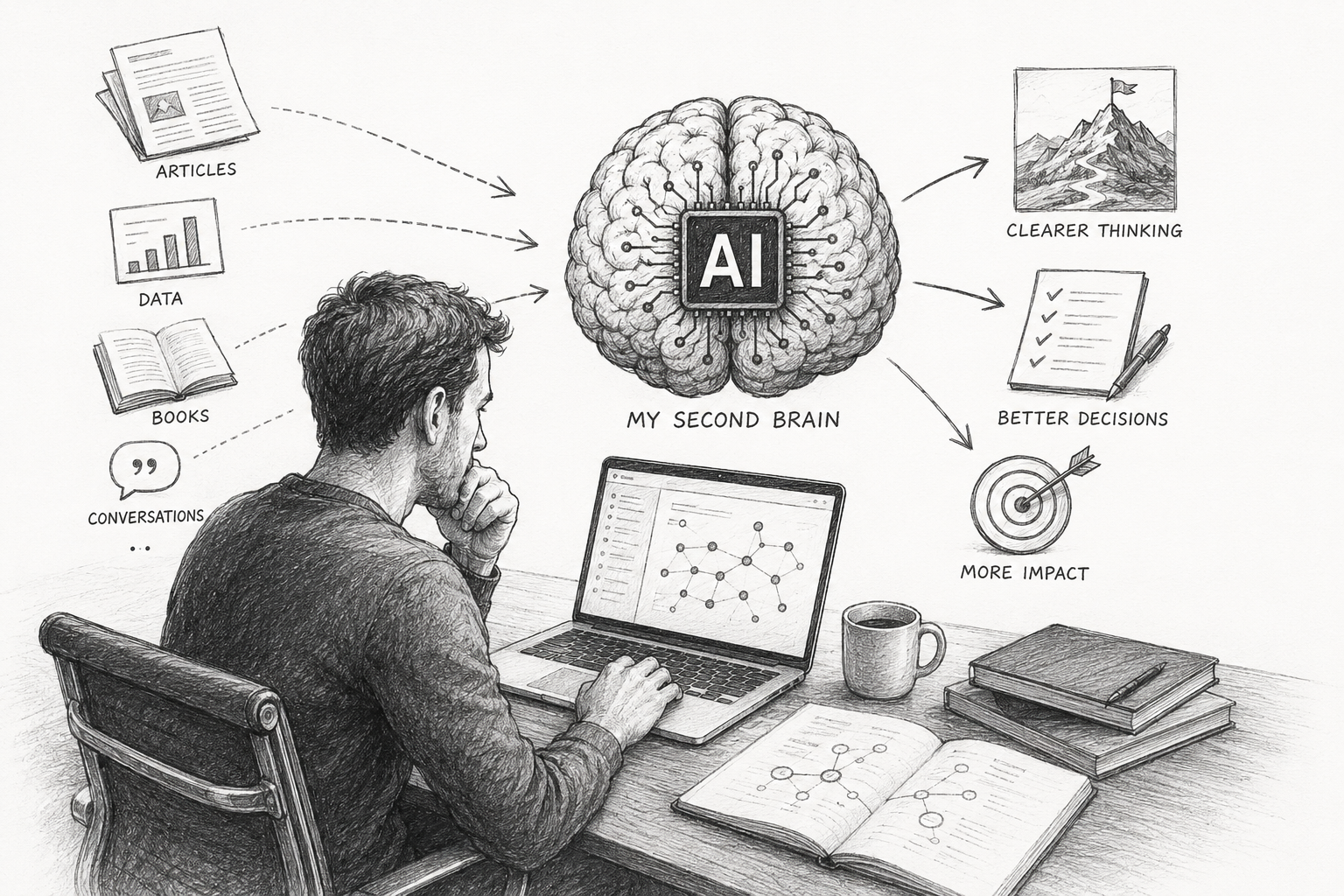
For the past few months I've been building, evolving and using my AI "second brain". Its an AI-augmented system that ingests your work artifacts (calendar invites, emails, chat threads, group discussions, review docs, AI meeting notes, etc.), organizes it, and surfaces what matters - Daily chat digests, Weekly project rollups, Meeting prep briefs, etc. It is a set of about two dozen custom skills wired into a pipeline that runs a few times a day.
I started by reusing skills built at Meta, and then built some custom new skills specifically for my workflows. It has been a great exercise in understanding the incredible opportunity and also the limitations of such systems.
What is working well for me
The daily digest helps me prepare for the day ahead. I used to spend the first thirty minutes of every day scrolling through chat threads trying to figure out what happened overnight. Now a pipeline scans a dozen spaces, groups the threads by project, and gives me a two-page summary with the items that actually need me flagged at the top. I start my first meeting well prepared for what to expect and prioritize.
Meeting prep is quite handy. Before every meeting, the system pulls the attendee list, checks what I've discussed with each person recently, surfaces any open threads between us, and writes a one-page brief. In the past, this was usually a scramble searching for context and past threads . Now the conversations are noticeably better.
Compounding project context pays dividends. Each project has a short file that describes what's happening at any given time - goals, people, recent decisions, open questions. Every time the pipeline runs, it updates it. The result is that when I ask the AI anything about a project, it already knows the state of play. This compounds rather rapidly and is definitely the most valuable thing to come out of this second brain exercise.
Simplified tracking of action items is very useful. The daily pipeline extracts action items from chat, meetings, and digests, writes them into a format my task manager imports into OmniFocus automatically, and tags them by project. Before this, my action items lived in six different places and I lost about a third of them. Now they go into one list. I still miss some, but it's closer to 5% than 30%.
What I would do differently
It is not about the demo. I built skills because they were cool. Then I hunted for problems they could solve. The ones that stuck solved something I did not want to do. The ones I deleted were demos I showed once or what felt cool but in hindsight was a highly niche use-case that I didn't need a sophisticated system to solve. If you're starting out, pick the one thing you do every day that makes you groan. Don't get to the second skill before you have derived value from the first one.
Only ingest what you need. I wired up six data sources before I built a single filter. Within a week I was drowning in digests of digests. The instinct is always to add more inputs because, why not. More data must mean better outcomes, right? Wrong. It can get quite overwhelming. Build the discipline of removing unused or low signal sources. I now treat every new source like a subscription, it has to prove its value or it gets cut.
Write context files, not folder trees. I initially spent weeks on naming conventions and folder taxonomies. It looked great when I was perusing them but the return on investment was much more in the short project context files that were created capturing who's involved, what the goals are, what happened this week. Those short files made every AI interaction sharper.
Pipelines vs. Agents. Here is my evolving take on this topic. Pipelines run on a schedule and produce predictable output. Agents reason through ambiguous situations. I confused them and interchangeably used them for months, asking the pipeline to make judgment calls and the agent to do plumbing. Both failed as you would expect. The distinction seems obvious in retrospect. It wasn't.
The Gotchas
If you build a system that generates content, and that content feeds the next round of generation, you are not just compounding the good stuff, you are also compounding the errors. Here is an example flow. The pipeline reads a chat thread and writes a daily digest. The digest feeds a project context file. The next day's planning doc treats that context as ground truth. A weekly update cites the planning doc. Six weeks later you are in a real conversation referencing a "decision" that nobody actually made.
The first hallucination is catchable. By the third one, it is a fact you act on. You are starting to progressively move away from ground truth. And the worst part is that you dont know it until its really late.
My initial second-brain setup had no defense against this. After a few errors that I luckily happened to catch, I grew paranoid and started building a grounding system for every piece of content that my second brain generates. It source-tags every assertion, separating human-written content from agent-generated content, expiring agent context by default, running adversarial audits before anything generated gets consumed by something else that generates. It's unglamorous plumbing but has increased my confidence. It's also the difference between a tool you can trust and one that will most certainly embarrasses you.
A few more problems I'm actively working on:
Privacy by design. My agent sees everything - private notes, sensitive threads, career planning. The boundary between "private" and "shareable" has blurred. So I am building a way to separate contexts, have explicit guardrails, hard walls between what each agent can see.
Context decay. Project files tend to drift, some of it is natural but with an AI system, it can result in worse outcomes. Six-month-old assumptions sit next to yesterday's decisions and the AI weights them equally. I need a freshness model. Everything in my second brain is treated as equally current, and that's a bug I haven't fixed yet. I am working on a plan to fix this.
Keeping my own edge. The things I'm offloading - my writing, synthesizing, prioritizing are also the muscles a senior leader needs. The summaries come faster, but I notice my own first drafts come slower. The system makes me more productive. I have to make sure it doesn't make me worse at the job underneath. So for example, I wrote much of this post (as I do with all my critical business communication and strategy docs)so my experiential edge gets sharper, while my AI system helps me stay highly productive.
If I started over tomorrow
I would build one skill that saves me twenty minutes a day, and nothing else until it worked reliably for two weeks.
I would treat every generated artifact like a database row that is sourced, timestamped, and queryable, not like a note I tossed in a folder.
And I would design for hard walls between what each agent can see, because it is critical to have only the desired context shared, not just everything.
The bottom line
A Second Brain has tremendous upside. I have saved a ton of time with it and am definitely much more productive and largely focus my time on building things and on things that are highest leverage. It has also tripped me every once in a while, especially when I did not expect it. Build it carefully. Audit it often. Build grounding mechanisms. Don't trust anything that can't show you where it came from. Once you get there, it is super worth it.
Further Reading: My detailed post on my Second Brain.